I-BMS Battery Management System nayo ibizwa ngebhodi lokuvikela ibhethri le-lithium-ion, iyadingeka ephaketheni lebhethri le-lithium-ion. Ngenkathi i-DIY iphakethe lakho lebhethri, ungase udideke ukuthi ungayikhetha kanjani i-BMS efanele. Ngokwesibonelo, ngizodinga i-BMS enechweba elivamile noma ichweba elihlukile? Kulesi sihloko, sizokwabelana ngamathiphu.
Isinyathelo 1: Linganisa ukumelana kweseli elilodwa futhi wenze ukufanisa ukumelana
Inhloso: Ukuthola ukuvumelana kokuphikiswa ngakunye ephaketheni lebhethri futhi uthuthukise ukuvumelana kokushaja nokushajwa kwebhethri yephakethe.
Qaphela: Umehluko wokumelana wangaphakathi phakathi kweseli elilodwa eqenjini elifanayo kufanele ulawulwe phakathi kuka-0.1mΩ kusigaba A, futhi ngaphakathi kuka-0.5mΩ kusigaba B. Ngaphezulu kwe-1mΩ, ukuvumelana kwephakethe lebhethri kuzowohloka ngokushesha futhi kuthinte ubude bempilo.
Isinyathelo 2: Ukuhlukaniswa kwamandla nokuhlolwa kwamaseli ebhethri elilodwa
Inhloso: Select and pair cells with the same capacitance and voltage of the individual cells to ensure that the battery pack can effectively perform its function.
Notes:
1: The upper and lower error of capacitance in the same group does not exceed 1%, the voltage does not exceed 30mV and the charge and discharge curves are consistent (increase and voltage reduction are consistent), to fully exert the power efficiency. If the capacity difference is too large, it is easy to lose power: power outages and reduced battery pack life.
2: If there is no battery capacity analyzer to test the cell capacity, the cells must be purchased from the same brand and production batch to avoid excessive differences in capacity and voltage consistency.
Isinyathelo 3: Combine battery cells and protective board(I-BMS)
Inhloso: Qedela inhlanganisela yebhethri kanye nesekhethi yokuvikela iseli.
Notes:
1: Xhuma amaseli awodwa ngokuhambisana noma uchungechunge ukuze uthole umthamo namandla webhethri edingekayo. Ngaphakathi 4 ukuhambisana, kuyatuseka ukuthi kusebenze ngokufana kuqala bese kulandela uchungechunge ukuze kuzuzwe ukusebenza kahle okuphezulu kwebhalansi kagesi phakathi kwamaseli.
2: Isiqephu sokuhlanganisa (ucingo) impahla yokuxhumana okuhambisanayo nochungechunge phakathi kwamaseli kungcono ithusi elibomvu noma ithusi elibomvu, kulandele ipuleti lethusi ne-nickel. Akufanelekile ukusebenzisa abaqhubi bensimbi abanokumelana okuphezulu kakhulu ukuze baxhumane nokugwema ukwandisa ukumelana. inani.
3: I-diameter yocingo kanye ne-current yebhethri nebhodi lokuvikela kudingeka kwanele. Try to choose a larger wire diameter to ensure the safety of the line and prevent the line temperature from producing abnormally high temperatures due to large currents. It is recommended to use 16m² of silicone wire when the design output power is below 1000W (inclusive). When the design output power is 1000W-3000W, use 35m² of silicone wire.
4: The battery core and the protection board circuit must be connected in order to avoid short circuits.
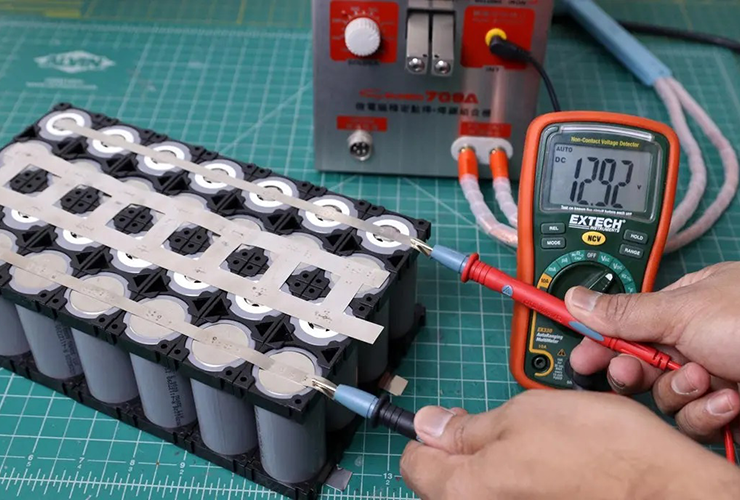
Isinyathelo 4: Test the voltage of each battery cell group and check whether the BMS output is correct
Inhloso: Confirm that the circuit connection method in the previous step is correct and ensure that the lithium battery protection board functions normally.
Qaphela: For details on the detection method, please refer to the article
Isinyathelo 5: Lungiselela izingxenye ezihlukahlukene, imithwalo, ukushaja nokukhipha amasekhethi, namaswishi.
Inhloso: Imigqa, amaswishi kanye nomshwalense kufanele kusethwe ngokwamandla aklanyiwe futhi kubekwe kahle.
Qaphela: Idizayini yamandla kufanele inake imininingwane yokulawulwa kwesifunda kanye nezingxenye, wire ububanzi kanye nomshwalense. Ngesikhathi esifanayo, inkinobho yebhethri kufanele ifakwe ukuze iphephe.
Isinyathelo 6: Ukushaja Test
Inhloso: Qinisekisa ukuthi umsebenzi wokushaja ujwayelekile.
Notes:
1: Indlela engcono kakhulu yokushaja yamabhethri e-iron lithium yi-CC-CV. Ishaja yokuqala ku-voltage yokushaja ejwayelekile engu-14.6V enamanje ongashintshi (ngokuya ngeshaja ebekiwe A), nokugcina i-voltage engu-14.6V cishe 30-60 imizuzu. Qhubeka nokushaja nge-current encane kuze kube yilapho yamanje ingaphansi kuka-300mA.
2: Ishaja kufanele isebenzise ishaja ekhethekile kumabhethri e-iron-lithium. Do not use chargers for other lead-acid, ternary lithium or nickel-metal hydride batteries. Because the charging control voltage is different, there will be problems of undercharging, overcharging, and overvoltage. or dangerous.
Isinyathelo 7: Loading (discharge) test
Inhloso: To confirm the effectiveness of the designed output power and the normal functions of various safety insurances.
Notes:
1: Test continuously for at least 20 minutes at the maximum designed output power (or the power consumption of electrical appliances with similar loads). All wire diameters, batteries and various component configurations have no abnormal temperature rise and the safety device has no abnormal operation.
2: Each designed socket output is tested continuously for at least 20 minutes with corresponding power load. There is no abnormal temperature rise relative to the wire diameter and component configuration and there is no abnormal operation of the safety device.
Isinyathelo 8: Battery Pack Packaging
Inhloso: To protect the safety of the battery pack and prevent accidents
Notes:
1: The battery pack should be placed away from high temperatures, humidity, and flammable environments. The box must be insulated, moisture-resistant prevent sliding and collision, and avoid using boxes of inappropriate sizes.
2: The battery core must be firmly fixed in the box and cannot be shaken or loosened to avoid loosening of the circuit and causing a short circuit.
Amandla we-SkA imiklamo & ikhiqiza i-BMS amaphakethe ebhethri yebhayisikili kagesi. Xhumana nathi ukuze uthole ngokwezifiso noma ukukhiqiza.